Why We Choose Natural Fabrics (And Why It Matters)
When we talk about the clothes we reach for every day — the ones we actually wear, not the ones that hang in the wardrobe with tags still on — they tend to share something in common. They are usually made from natural fibres.
There is a reason for that. And it goes beyond aesthetics.
Natural Fabrics Breathe
Linen, cotton, silk, and wool are all hygroscopic — they absorb and release moisture rather than trapping it. This makes them dramatically more comfortable in warm weather, against active skin, and across long days. Synthetic fabrics, even performance fabrics marketed for breathability, work differently: they wick moisture away from the skin but do not allow it to naturally evaporate in the same way.
The result is simple: natural fabrics feel better to wear. That is not a marketing claim — it is thermodynamics.
Linen Gets Better With Age
Unlike synthetic fibres that pill, snag, and lose their shape over time, linen softens with every wash. A linen shirt bought today will feel noticeably better in two years than it does on the first wear. The fibres relax, the texture becomes more supple, and the character deepens.
This is the opposite of how most fast-fashion garments behave. Investing in natural fabrics is, in practical terms, investing in clothes that last.
They Work With Your Skin, Not Against It
Natural fibres are less likely to cause irritation or static, and they do not carry the same chemical finishing agents that many synthetics require during manufacturing. For anyone with sensitive skin — or who simply finds themselves itchy and uncomfortable in certain fabrics — switching to natural materials often makes an immediate difference.
The Aesthetic Argument
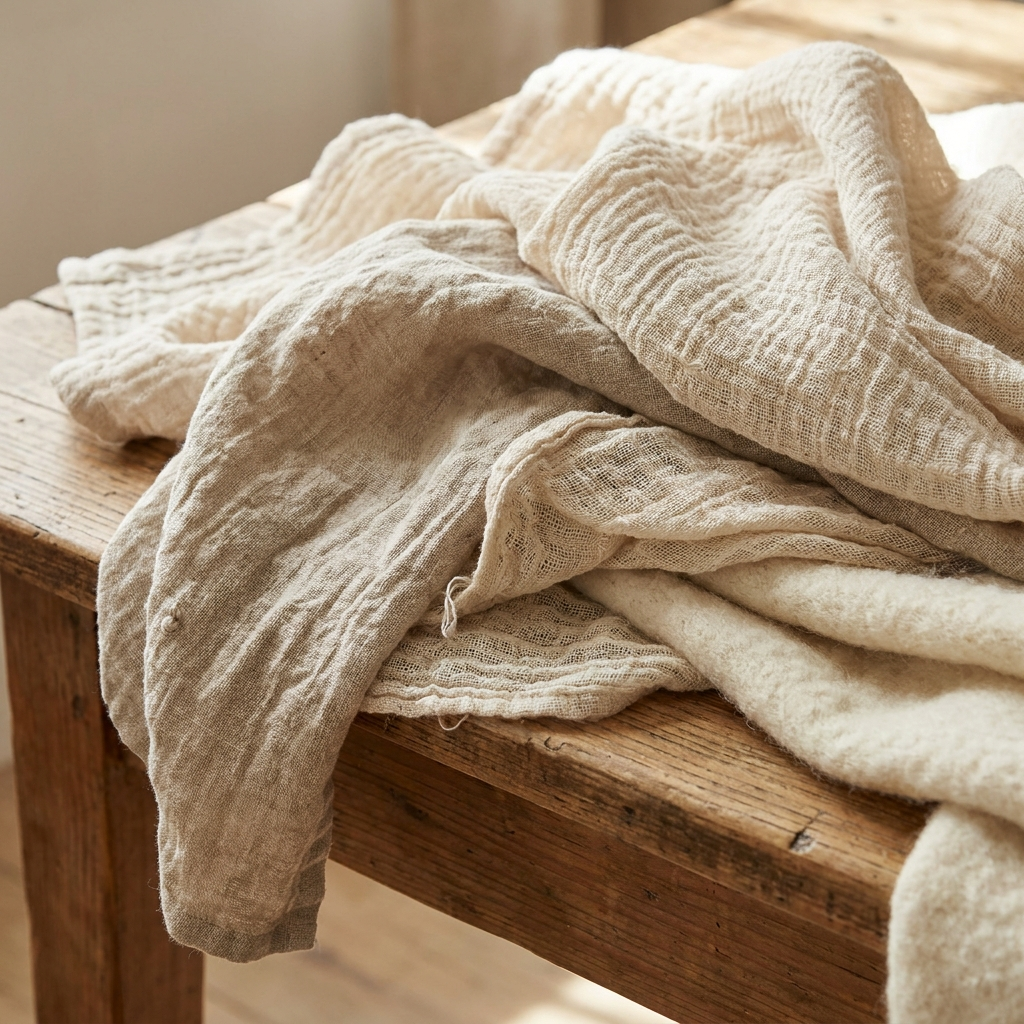
There is a quality of light that natural fabrics catch differently. Linen has a matte, slightly textured surface that reads as effortless and intentional at once. Cotton has a softness that makes even simple cuts look considered. These fabrics drape in a way that works with the body rather than imposing a silhouette on it.
This is part of why natural fabrics photograph well and why clothes made from them tend to look more expensive than their price point suggests. The material does the work.
Care and Longevity
Natural fabrics do require slightly more care than synthetics, but the return is proportional. Wash cold, avoid harsh detergents, hang or lay flat to dry where possible. Linen in particular rewards patient care — machine wash on a gentle cycle and you will have a piece that holds its shape and colour season after season.
The wrinkle question always comes up. Yes, linen creases. But a slight rumple in a natural fabric reads as relaxed and lived-in, not careless. It is part of the aesthetic — the opposite of the artificial, always-perfect look of polyester blends.
Our Approach at Thyme & Linen
Every piece we carry is selected with fabric quality as a primary criterion. We look for natural fibre content, honest construction, and silhouettes that wear well across real life — not just in editorial shoots.
When you buy from us, you are buying something to keep. That is the intention behind everything we source.